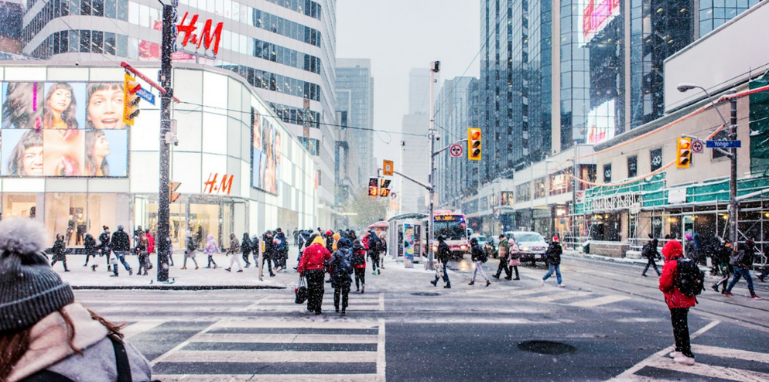
As a new year begins, moments of pause invite reflection. Imagine standing in the heart of Toronto’s bustling Yonge-Dundas Square, typically buzz with life and energy, often compared to New York City’s Times Square.
The air is filled with the hum of conversations, the sounds of street performers, and the steady flow of traffic. Neon lights flicker as billboards compete for attention, each striving to capture the interest of thousands of daily spectators.
The Quiet Streets of Advertising: How COVID-19 Transformed Yonge and Dundas Square
Now, picture this iconic intersection during the peak of the COVID-19 pandemic.
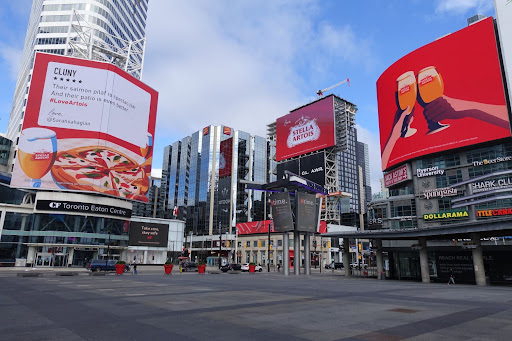
The streets are eerily empty. Billboards shine brightly but fall upon vacant sidewalks. The absence of the usual multitudes of people creates a notable silence, a distinct contrast to the square’s typical vibrancy.
The Impact on Advertising
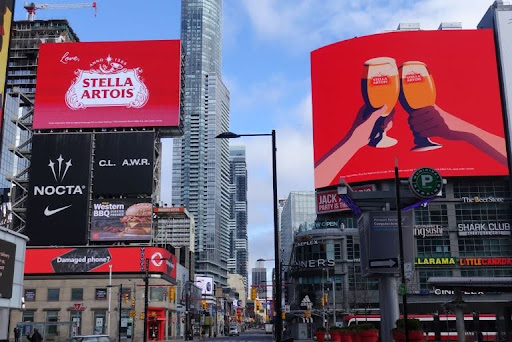
Before the pandemic, Yonge and Dundas Square was a lively hub of activity, a prime location for advertisers. Brands relied on the heavy foot traffic and the energetic ambiance to capture the attention of potential customers. The square’s dynamic environment made it an ideal canvas for outdoor advertising, where the blend of neon lights and bustling crowds created an unbeatable setting.
However, when COVID-19 brought the world to a standstill, Yonge and Dundas Square underwent a dramatic transformation.
Lockdowns and social distancing measures turned the once-vibrant intersection into a ghost town. Businesses shuttered their doors, and the usual buzz of activity vanished.
For advertisers, this sudden silence posed a unique challenge. Billboards that once thrived on the constant flow of pedestrians now faced a sparse audience, rendering traditional methods of outdoor advertising far less effective.
Adapting to the New Normal: Digital Dominance
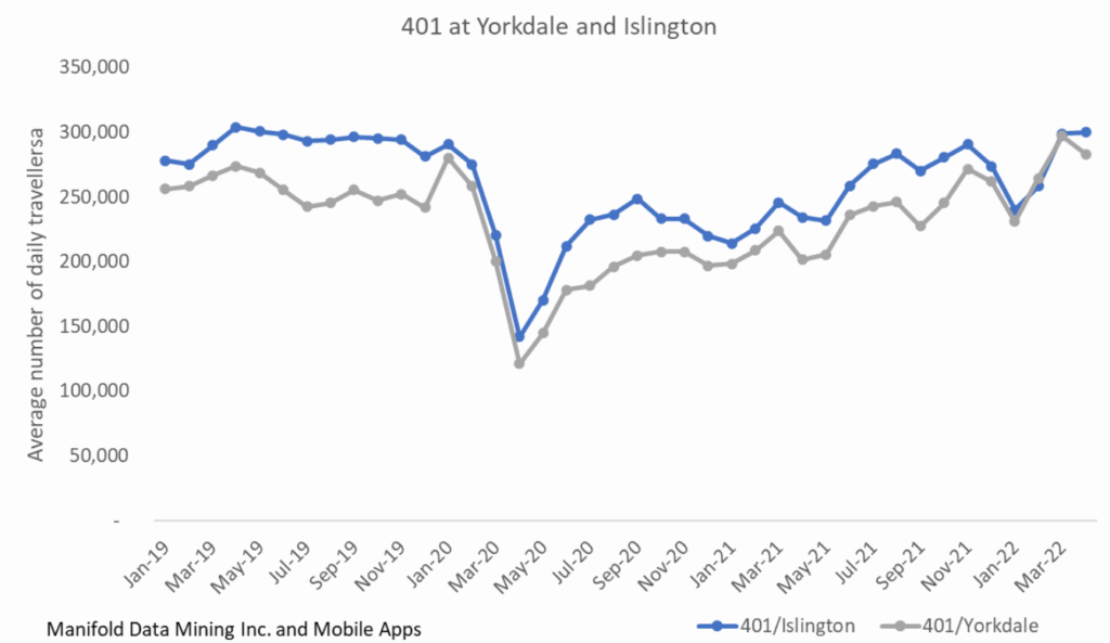
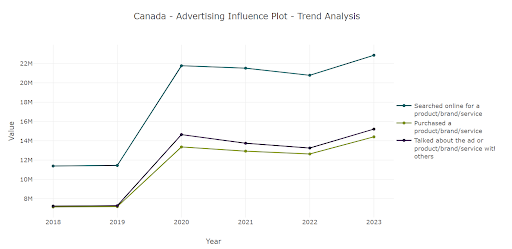
As the streets of Yonge and Dundas Square grew quieter, a different scene unfolded online. People stayed home, turning to digital platforms for work, entertainment, and shopping. This shift presented a unique opportunity for advertisers. Our data shows a significant increase during COVID-19 in online searches, purchases, and discussions prompted by digital ads. This surge, as illustrated in the graph above, underscores the adaptability of advertisers who swiftly pivoted their strategies to meet consumers where they were spending their time: online.
Capturing the Moment: Empty Streets, Full Insights
The contrast between the bustling pre-pandemic Yonge and Dundas Square and its quietude during COVID-19 serves as a powerful visual metaphor for the broader shifts in advertising. The empty streets, juxtaposed with the vibrant digital landscape, highlight how consumer behavior transformed during the pandemic. Despite the physical emptiness, digital engagement soared. People continued to interact with ads, purchase products, brands, and services, and discuss their choices with others. This insight underscores the resilience and adaptability of advertisers who pivoted their strategies to digital platforms during challenging times.
Looking Ahead: Lessons Learned
As we enter a new year, the effects of COVID-19 on advertising feel less like a disruption and more like a defining lesson. Yonge and Dundas Square remains a powerful symbol of resilience and adaptation. While the streets were once empty, the insights gained during that period continue to shape how advertisers move forward. The post-pandemic landscape has made one thing clear: digital advertising, guided by data and a deeper understanding of consumer behavior, is now central to modern strategy.
Looking ahead, the story of Yonge and Dundas Square is not just about a moment in time, but about momentum. What began as empty streets sparked transformation, innovation, and smarter ways to connect with audiences. As the year resets, advertisers are not starting over. They are building forward, armed with clearer insight, stronger digital tools, and lessons learned when the world slowed down but attention did not.